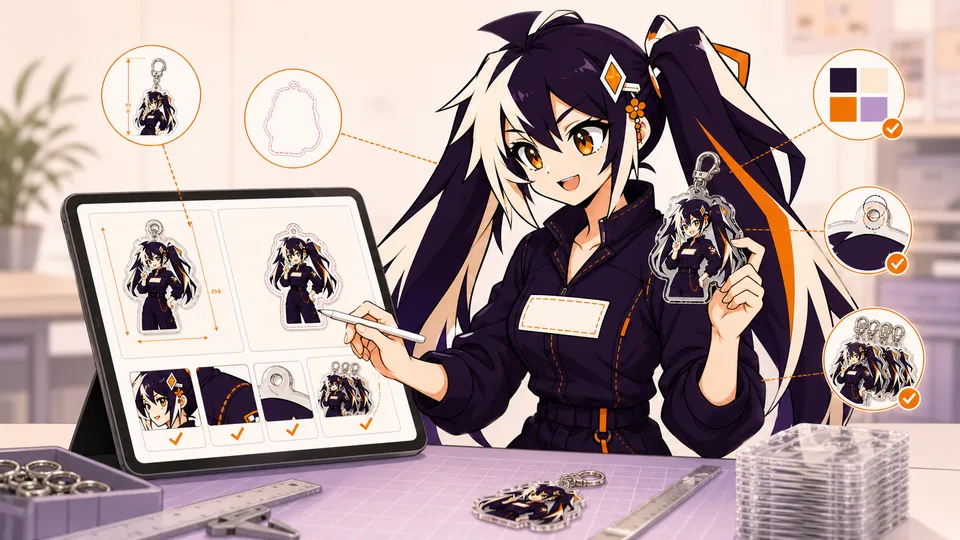
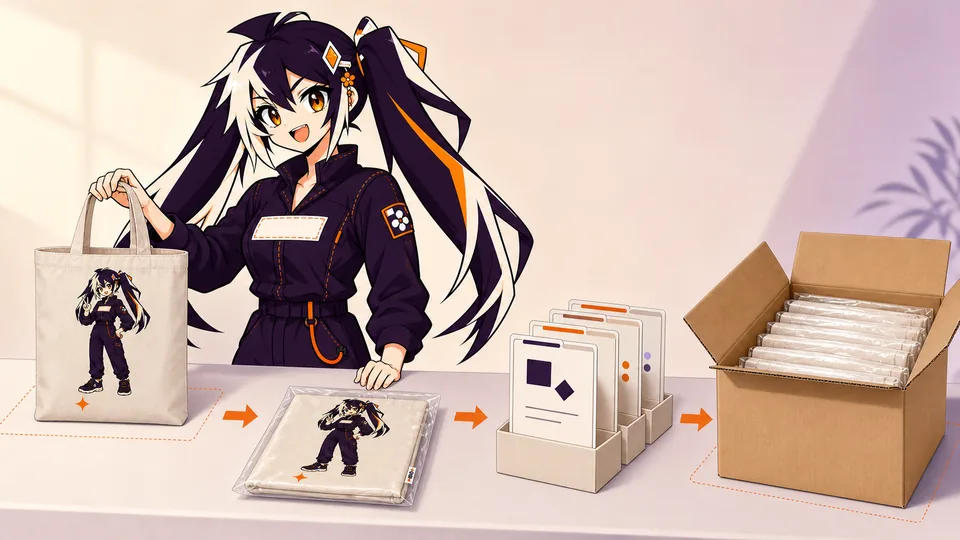
A repeat order is reliable only when the approved sample and its packing method are documented together. Packaging protects the product and tells the next production run how every accessory and label should be handed off.
Record product orientation, protective film, accessory count, individual bag, insert, label position, pieces per inner pack and carton quantity. Link that specification to the approved sample and revision.
01
Key takeaways
Use these decisions to guide the detailed checks below.
- Tie every reorder to an approved product and packing revision.
- Record each accessory, insert and orientation explicitly.
- Separate individual units, inner packs and cartons.
- Use labels that match the design and order manifest.
- Review any material, artwork or packing change before repeating production.
| Record | What it identifies | Reorder question |
|---|---|---|
| Approved product | Artwork, size, material and accessories | Has any part changed? |
| Unit pack | Protection, inserts and orientation | What belongs with each finished item? |
| Inner pack | Grouped units and labels | How are designs separated? |
| Carton record | Pack counts and destination instructions | Do the totals reconcile with the order? |
02
Define the approved sample as a version
Save the final artwork, proof, material, finish and accessory choices under one revision ID. A physical sample without a matching file version is difficult to reproduce accurately.
03
Specify product-level protection
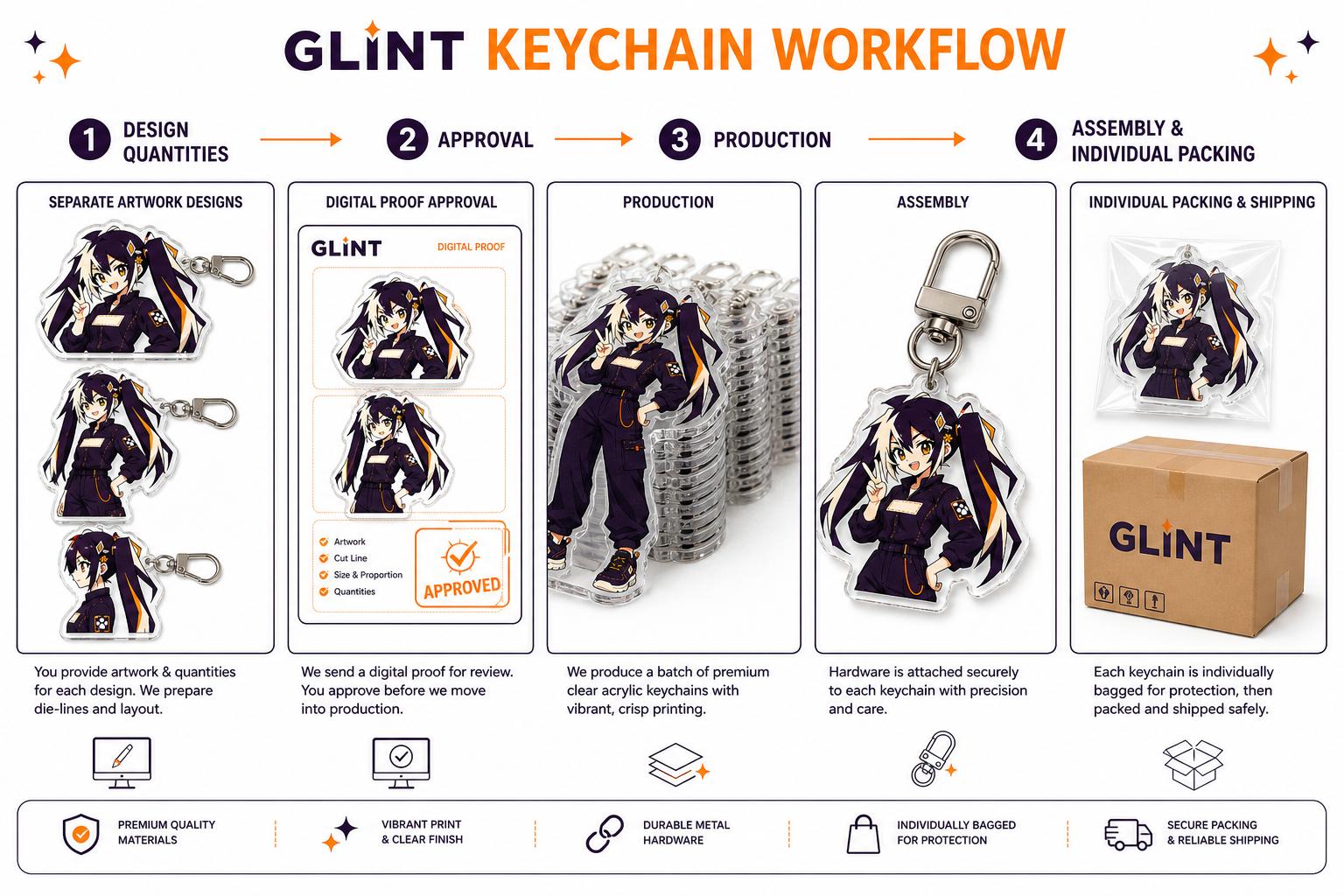
State whether acrylic film stays on, whether hardware is wrapped separately and whether fabric products are folded with a board or tissue. Prevent metal parts from rubbing printed surfaces.
04
List every component and its orientation
Count clasps, straps, bases, inserts and spare parts. Photograph the intended placement when written instructions could be interpreted more than one way.
Describe a complete sellable or usable item before counting cartons. For a standee, that may involve a paired upright and base; for a charm, the selected attachment; for an assortment, the required designs and pieces. The exact composition depends on the order. List every component that must travel together and distinguish included parts from optional extras or separately ordered items.
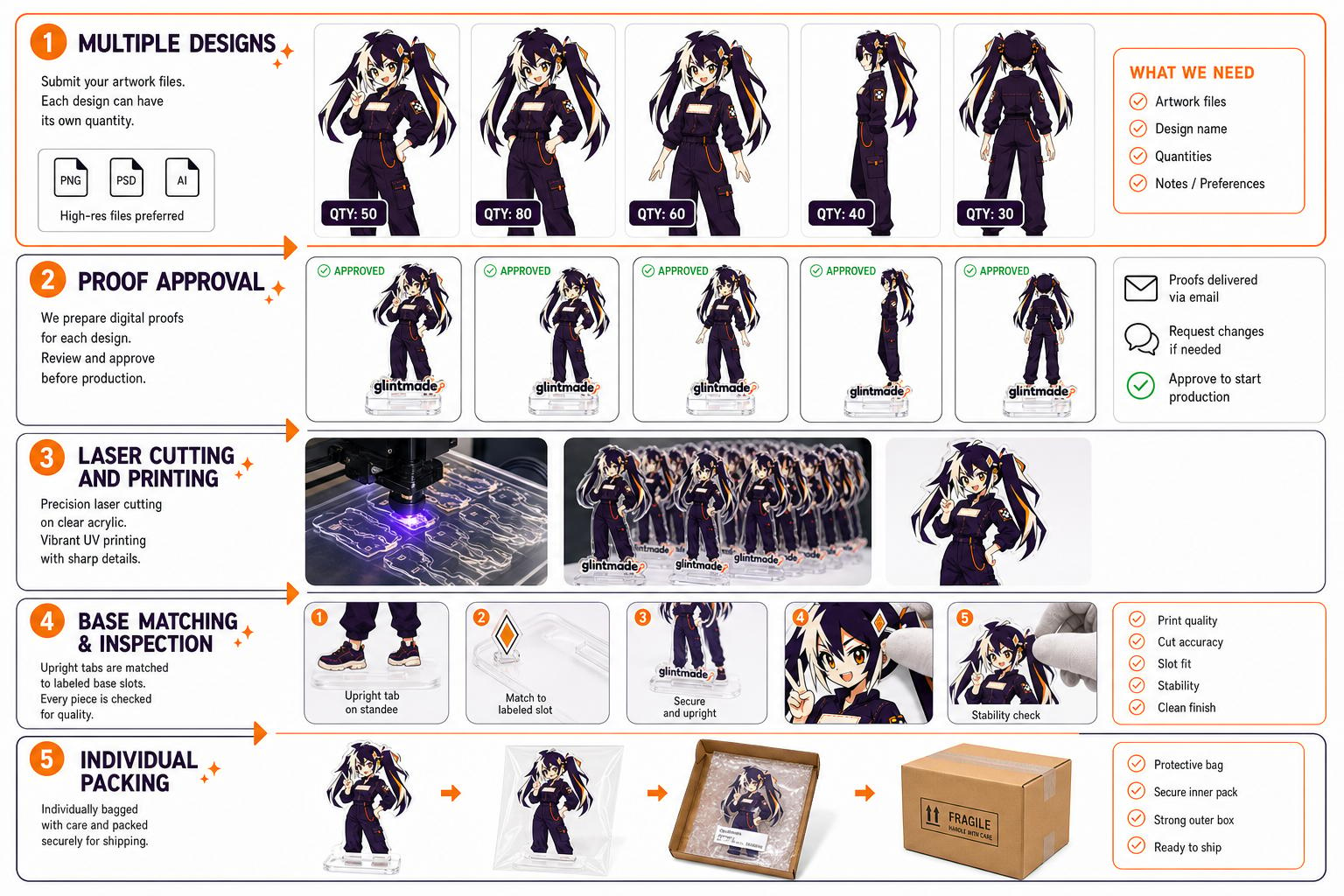
In a hypothetical pack with three designs and an insert, the packing instruction needs more than a total piece count. It should identify one of each design, the insert version and the intended orientation if presentation matters. If the order contains both packs and loose stock, keep their allocations distinct. This example illustrates a record format rather than a standard Glintmade packing service; confirm the requested arrangement and quotation for the actual order.
05
Make labels traceable
Define design ID, barcode, country marking or carton label position. Use the same design IDs found in the order manifest and approved proofs.
06
Record inner packs and carton counts
Specify pieces per bag, inner pack and carton, plus maximum carton weight if required. Recheck totals during pre-shipment inspection.
- Approved revision linked.
- Components and orientation photographed.
- Carton quantity and label placement confirmed.
- Changes logged for the next repeat order.
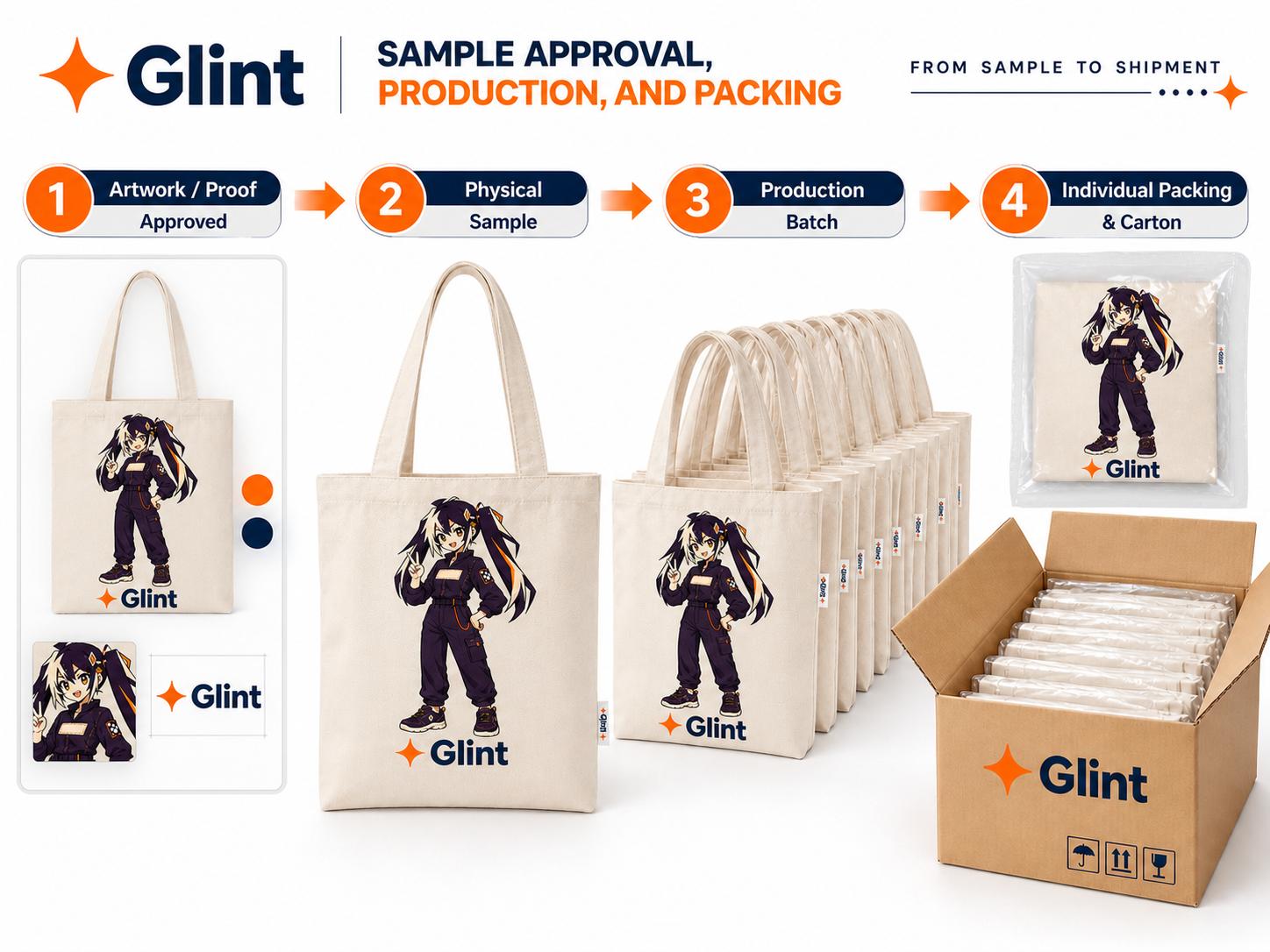
07
Turn packing and repeat orders into specifications
Packaging is part of the product handoff. Specify whether protective film stays on acrylic, whether metal hardware is wrapped away from printed surfaces, how a base and upright are paired, how a canvas bag is folded and whether sticker sheets need a backing card. A photograph of the approved pack-out is often clearer than a paragraph, but the image still needs a design ID and revision date.
Record the component count from the inside out: pieces per individual bag, individual bags per inner pack and inner packs per carton. Define label content and position, including barcode, design ID or country marking when required. If several designs share a carton, state whether they may be mixed and how the outer label identifies the assortment. These details prevent the receiving team from opening every carton to discover what is inside.
For a repeat order, reuse the approved specification only after checking what changed. Material availability, artwork revisions, accessory colors, destination labeling and carton limits can all evolve. Create a new revision when any of those items changes and keep the old approved sample for comparison. 'Same as last time' is useful context, but it is not a complete production instruction unless last time's files and packing record are attached.
Quality control should begin with the approved proof and sample, not with a vague idea of perfection. Create checkpoints for identity, dimensions, appearance, function, quantity and packing. Verify that the design ID and variant are correct before inspecting print. Then check finished size, orientation, contour, major colors, accessory and assembly. A functional product can fail because the wrong clasp was attached; a beautiful product can fail because it was packed under the wrong label.
Use a consistent viewing method. Inspect print at normal viewing distance first, then examine edge and surface issues under steady light. Assemble products on a flat surface and use representative hardware rather than judging loose components. For stickers, inspect the cut and peel behavior as well as the printed face. For canvas, check seams, placement and fabric construction before focusing on tiny variations in the weave.
Record defects by type and design ID. Photographs should include scale and enough context to identify the part. Separate isolated cosmetic variation from a repeated process issue; the corrective action may be different. Before shipment, confirm the counted quantities and packing labels against the same manifest used at proof approval. This closes the traceability loop and gives the repeat order a practical quality history.
- Identity and quantity match the approved manifest.
- Dimensions, print, contour and accessories match the proof.
- Function, assembly and packing are checked on representative pieces.
08
Use filenames and a manifest that remain traceable
A multi-design order becomes risky when the files, cart quantities and packing labels use different names. Give every sellable design a short stable ID, then use that ID in the artwork filenames, order manifest, proof comments and packing specification. 'GM-KC-014_front.psd' can be traced. 'final-new-2.psd' cannot. Stable names matter even on a small order because the same design may return months later as a different size or finish.
The manifest should use one row per product variant. Record design ID, product type, finished size, material, finish, front/back structure, accessory, quantity and packing. If most designs share a specification, state the default once and list exceptions in their own rows. Do not provide only a grand total; production and packing need a quantity assigned to every individual design.
Version the manifest and proofs together. When a correction is approved, update the revision number rather than overwriting the only copy. Keep obsolete files outside the upload folder so they cannot be mistaken for live artwork. At final approval, the cart or quotation total, the manifest total and the number of approved proofs should agree. That three-way check is one of the simplest ways to prevent missing or duplicated variants.
- One stable design ID for artwork, proof, quantity and packing.
- One manifest row for every product variant.
- One final revision folder with obsolete files removed.
09
Release a reorder from a change record
Begin a repeat order by identifying the previous approved job and listing what is intended to stay the same. Then list changes separately: artwork, size, quantity mix, accessories, packing, labeling or destination. Do not let a new quantity hide a changed product specification. A prior approval is valuable because it provides a reference; it does not establish that a different material or arrangement has already been accepted.
Compare the proposed reorder record with the previous proof and any retained sample. If a difference is intentional, name it and ask which dependent details need review. A new accessory can affect the individual pack, and a different assortment can change labels or inner-pack counts. Resolve those relationships before approval so the packing team is not left to interpret an outdated photograph beside a newer quantity list.
Keep a final release folder containing the accepted product version, packing instructions, order quantities and written approval. On receipt, compare the delivery with that record and document any discrepancy at the correct level: missing component, incorrect orientation, label mismatch or count difference. Keep the observation distinct from an assumed cause. Clear records help the supplier investigate the actual issue and give the next reorder a better baseline.
Make the receiving check practical for the person who will open the shipment. Give them the approved design list, unit definitions and packing reference before the delivery arrives. Ask them to record what was received in the same units used on the order, and keep unidentified or questionable items separate until their identity is resolved. This avoids turning an initial counting uncertainty into a mistaken stock allocation.
If a discrepancy appears, preserve the relevant labels and packing context as well as the product view. State whether the issue affects one unit, an inner group or a carton, and distinguish a confirmed count from a partial inspection. Refer the observation to the current order and quality process. This guide does not set an inspection sampling standard or promise a particular remedy; it describes the information needed to make the actual finding understandable and traceable for review.
- Previous approved job and revision identified
- Intentional changes listed separately
- Product and packing dependencies reviewed
- Unit, inner-pack and carton totals reconciled
- Final proof and packing approval stored together
FAQ
Frequently asked questions
Is “same as last time” enough for a reorder?
Identify the previous order and approved revision, then confirm what is unchanged. List changes to artwork, quantity mix, material, accessories and packing explicitly so the supplier can review the dependencies.
Should packing details be approved with the artwork?
Keep them in the same final production record, even if they are reviewed in separate views. A correct print does not resolve missing inserts, incorrect accessory orientation or an ambiguous assortment.
How do I avoid mixing designs during packing?
Use stable design IDs on the manifest and agreed labels, with quantities and grouping instructions at the correct level. Confirm how the chosen order will be separated rather than relying only on visual recognition.
Does a previous sample approve new packaging?
No. A sample is a reference for the configuration it represents. If protection, inserts, accessories or the pack arrangement changes, ask which parts of the new configuration need review.
What should I report if a delivery differs from the brief?
Record the order and design IDs, affected quantity, observed difference and supporting photos. Refer to the approved specification and follow the current quality policy without guessing the cause or assuming a remedy in advance.