A first convention is easier when the day has a few priorities and enough empty space for queues, food and discoveries. The goal is not to complete the entire program; it is to protect the experiences you care about most.
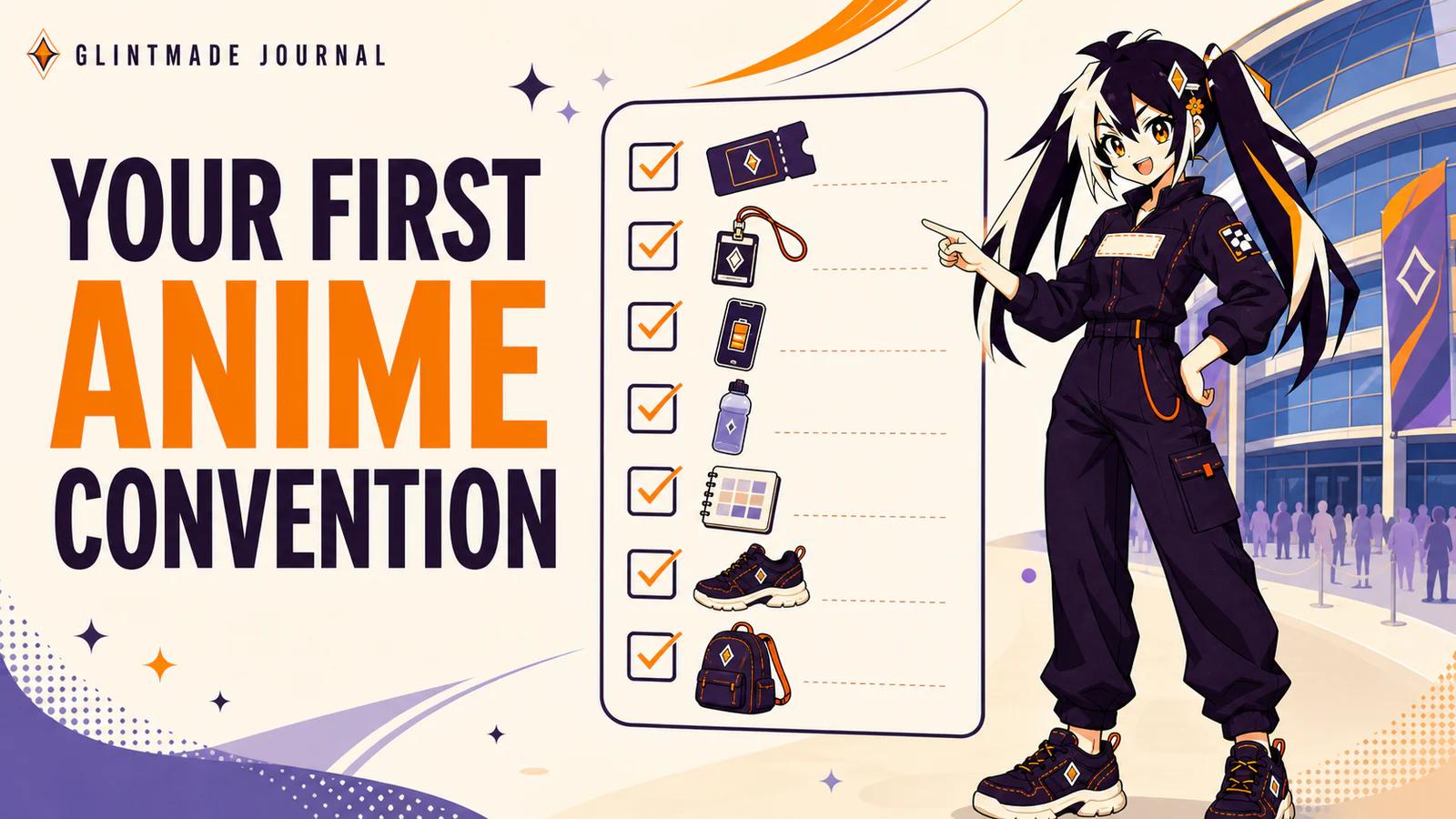
Buy through the official ticket channel, choose no more than two high-priority scheduled activities per day, download the latest map and schedule, and carry identification, payment, water, a battery pack and a safe way to protect purchases.
01
Key takeaways
Use these decisions to guide the detailed checks below.
- Buy through the event’s official channel and read the current entry instructions.
- Choose a few priorities and leave room for queues and movement.
- Treat a guest announcement and access to an activity as separate questions.
- Plan how to carry purchases before shopping.
| Stage | Check | Keep available |
|---|---|---|
| Before buying | Date, entry type and current conditions | Official ticket link |
| Before leaving | Schedule, route and permitted items | Current organizer instructions |
| At the event | Priority activities and fallback options | Meeting point and updated schedule |
| Before going home | Purchases and transport plan | Receipts and protective packing |
02
Check the event before buying a ticket
Confirm the year, date, venue, ticket type and refund or transfer policy on the organizer's website. A guest announcement does not always mean the guest appears every day or that the activity is included with general admission.
For younger attendees or anyone needing accessibility support, review age, companion and accommodation policies before checkout.
Choose the experience you want before choosing a ticket. A day of browsing Artist Alley creates a different plan from attending one scheduled appearance. Read the current official description of what the chosen ticket covers and keep unresolved questions for the organizer. Another attendee’s previous-year experience may be helpful context, but it is not the current entry rule.
03
Build a schedule with breathing room
Mark one must-do activity and one strong backup for each half-day. Add travel time between rooms and assume popular panels, guest sessions and entry lines will take longer than the printed program suggests.
Save the current schedule offline, but check for updates on show day because room assignments and appearances can change.
Leave a gap after a priority activity rather than treating the next start time as immediately reachable. If you are attending with friends, agree which activities are shared and when it is fine to split up. Keep a meeting point and a way to reconnect that do not depend entirely on everyone reading a message immediately.
04
Pack for a long indoor day
Bring only what you can comfortably carry for several hours. Venue rules control bags, props, food and refillable containers, so check them before leaving.
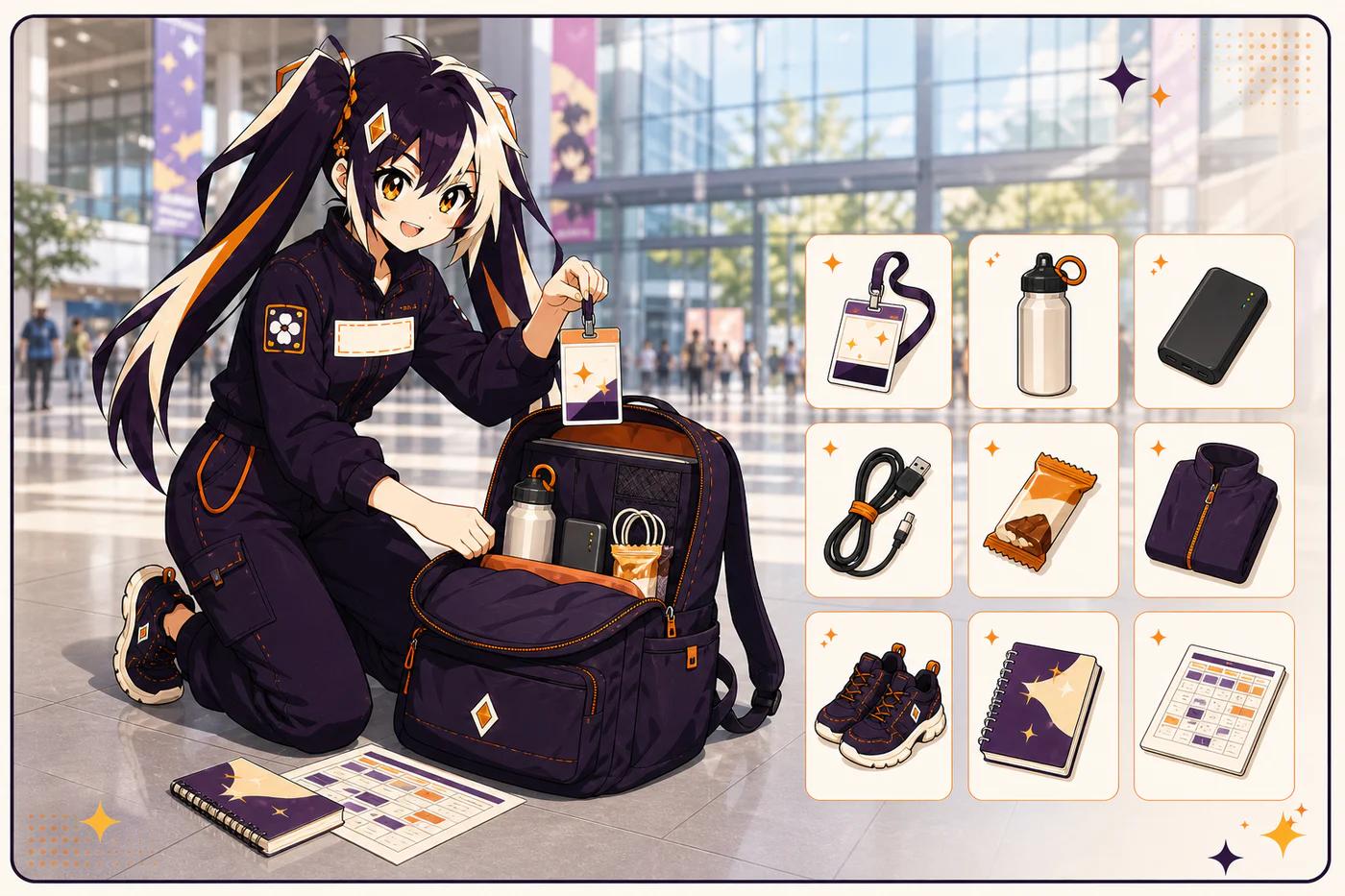
Check the event’s own permitted-item and access information before packing. Then think about the practical day: how to keep your ticket information accessible, carry what you need and protect what you buy. Avoid copying a universal packing list without considering the organizer’s rules and your own needs.
- Ticket or mobile entry credential and government ID where required
- Phone, compact battery pack and charging cable
- Water and permitted snacks
- Comfortable shoes and a light layer
- Protective folder or rigid sleeve for prints
- Reusable bag with room for Artist Alley purchases
05
Plan time and a budget for Artist Alley
Artist Alley is easier to enjoy before the final-hour rush. Walk one pass before making large purchases, note table numbers for artists you want to revisit and ask before photographing artwork or displays.
Carry more than one payment method. Connectivity and card processing can be inconsistent inside large halls.
Walk the area once if you need to understand the range before deciding. Keep track of where an item came from and ask before handling display pieces. If a purchase has separate parts, check how they are packed and how to assemble or care for them. Plan a protected place for prints or small components so the return journey does not become an afterthought.
06
Treat guest plans as changeable
Check appearance days, autograph or photo-op rules and any reservation requirement. Leave enough time to find the location and understand what items can be signed.
Build a day that remains worthwhile if one guest cancels. Panels, creators, exhibitions and fan programming should not all depend on one appearance.
Write down the specific activity you hope to attend, not only the person’s name. Check the current day, location and access conditions from the organizer. If that plan changes, use an alternative you would still enjoy. This makes the trip less dependent on one announcement remaining unchanged.
07
Finish the day without damaging purchases
Place prints, pins and acrylic pieces in separate protective areas rather than dropping everything into one crowded tote. Photograph receipts for higher-value items and check that small accessories are present before leaving the venue.
Make a short note about what worked. It will improve the next convention more than an overly detailed plan made before the first one.
Before leaving, check that your group, purchases and transport plan are accounted for. Keep receipts or order details for anything that needs later follow-up. If you want to return next year, note what worked and what you would change while it is still fresh; your own observations are more useful than trying to complete everything on someone else’s itinerary.
FAQ
Frequently asked questions
Should I plan every hour of my first convention?
Leave room for queues, movement and discoveries. Choose the activities that matter most and keep alternatives rather than filling the day with tightly connected appointments.
Are all panels and guest experiences included?
Check the current information for the specific event and activity. A general entry ticket does not, by itself, explain every reservation or separate purchase condition.
Can I use last year’s schedule?
Use it only as background. The current organizer schedule and instructions should control the plan for the event you are attending.
How should I protect merchandise during the day?
Ask about the item’s packing and handling, keep small components together and avoid crushing or bending vulnerable purchases. Choose a carrying arrangement suited to what you actually buy.
SOURCES
Official sources and further reading
Event details can change. Use these organizer-controlled pages before purchasing tickets, booking travel or acting on an application deadline.