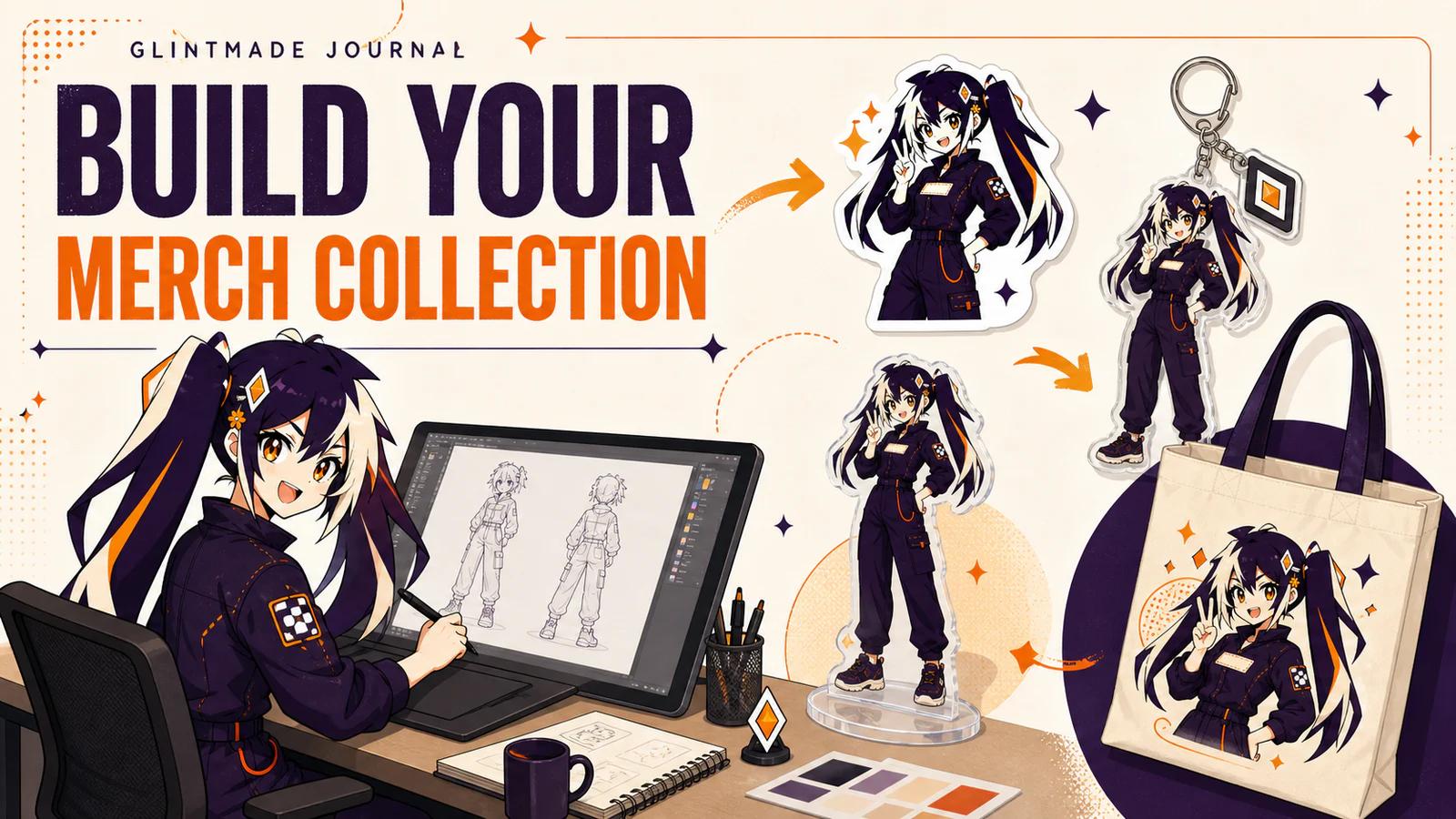
A character does not need to appear on every possible product to feel like an IP. A strong first collection repeats a recognizable visual idea across a small number of products that serve different buying moments.
Define the character's recognizable silhouette and audience, choose one hero product, add one accessible item and one complementary format, then test the collection with small quantities before expanding the range.
01
Key takeaways
Use these decisions to guide the detailed checks below.
- Define the character features that must survive a change of product or size.
- Choose one audience and a small set of distinct product roles.
- Adapt composition to the physical format rather than stamping one image everywhere.
- Keep artwork rights and production versions traceable.
- Use samples and actual customer response to decide what to expand.
| Role | Purpose | Design question |
|---|---|---|
| Hero product | Express the character clearly | What makes the character recognizable? |
| Accessible add-on | Offer a simpler first purchase | Which detail works at a smaller scale? |
| Complementary format | Add another use or display context | How does it differ from the hero? |
| Later experiment | Test a new direction after learning | What uncertainty will this item answer? |
02
Define what must remain recognizable
List the character's strongest silhouette, colors, expression, symbol and short story hook. Those elements should survive when the artwork moves from a large screen to a small charm or sticker.
A collection becomes easier to remember when products repeat a controlled visual system rather than using unrelated artwork for every format.
Create a short visual reference before deciding the merchandise range. Include the silhouette, principal color relationships, recurring motif and any feature that carries the character’s expression. Identify what can change between products and what should remain stable. This is an editorial design tool, not a legal determination that a character is protected or that a particular use is permitted.
Test recognition without depending on the largest illustration. Reduce the artwork to the approximate physical scale of a small item and compare it with a fuller display version. If the identity disappears, decide which feature to emphasize or simplify. Adding more decoration may make the production file busier without making the character more recognizable.
03
Design for a specific first audience
Decide who is most likely to understand the character and where they will discover it: an Artist Alley table, an online shop, a webcomic audience or a launch community.
The audience affects price, portability, packaging and how much context the product must carry on its own.
Describe a first customer in terms of use and context: someone discovering the character at a table, a follower wanting a small keepsake, or a buyer looking for a desk display. These situations create different expectations for explanation, packaging and product size. Choose the one you want the first collection to serve rather than trying to satisfy every possible audience.
Use actual conversations or prior sales when available, and keep assumptions labeled as assumptions. If the character is new, the first range can test what people understand and want to own. Do not turn follower counts, another creator’s popularity or a general trend into a promised demand figure for this collection.
04
Build a three-part first collection
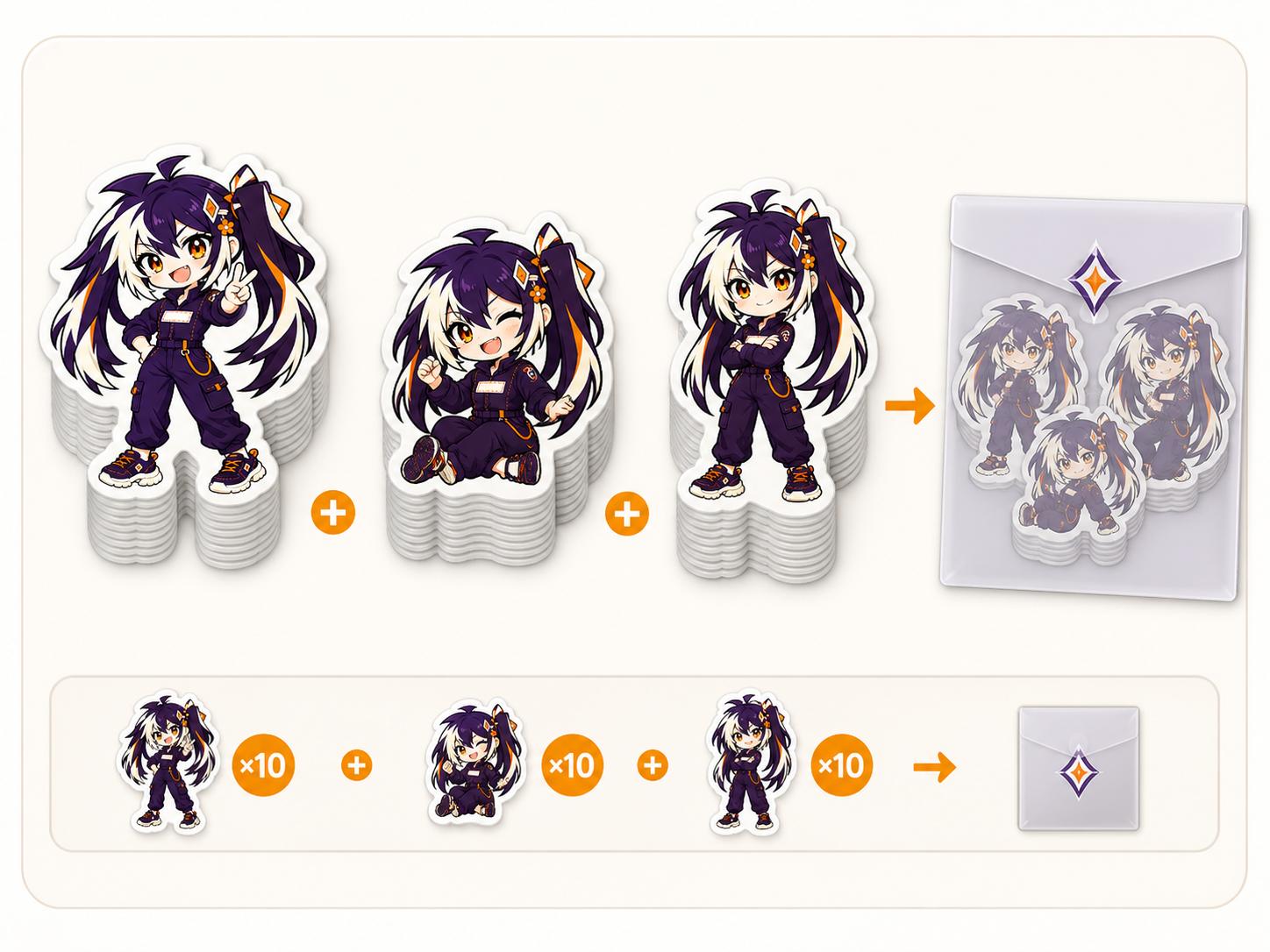
Choose one hero item that expresses the character clearly, one accessible add-on and one item that changes how the art is used or displayed.
Select a small number of products that do different jobs. A hero item can carry the most complete composition, an add-on can focus on an expression or symbol, and another format can offer a different way to use or display the character. The categories are planning roles, not a requirement to order three products or a claim that one combination always sells best.
For a hypothetical collection, imagine a full-character standee, an expression sticker assortment and a compact charm using a recurring emblem. The assortment is coherent because the artwork shares an identity while the physical uses differ. Before producing it, check whether each format adds enough value to justify its artwork, sample, inventory and packing decisions. Remove a weak item rather than expanding the range simply to fill a slot.
- Hero: acrylic standee or detailed charm
- Accessible: sticker, mini charm or button
- Complement: tote, display piece or coordinated bundle
05
Adapt the artwork to each physical format
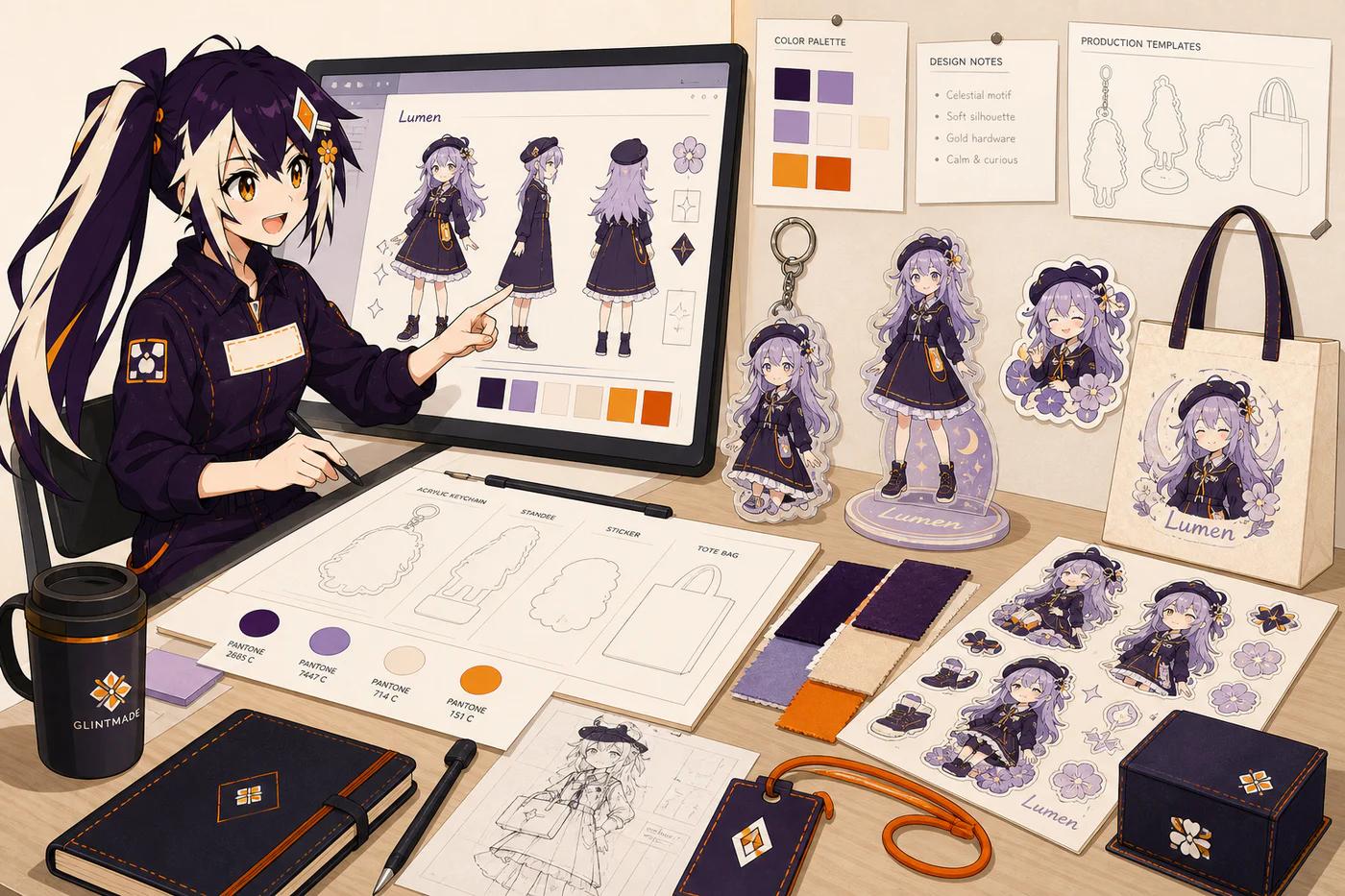
Do not simply paste the same canvas into different templates. A keychain needs a durable contour and hardware area; a standee needs balance and base fit; a sticker needs readable detail and a clean peelable shape.
Keep shared colors and character identity consistent while simplifying small-format art intentionally.
Build each layout around its physical boundaries. A hanging item needs a considered attachment point, a standee needs a paired support, and a sticker sheet needs a composition that accounts for individual cuts and handling. Show those features in the review preview. A beautiful central illustration does not, by itself, explain the complete manufactured object.
Keep master artwork separate from product exports. Give each export a product identifier and version so a change made for a small sticker does not silently replace the standee artwork. If there is text on the reverse or a separate base design, pair those files explicitly. Use the current product instructions for file preparation and numerical allowances instead of copying a specification from another format.
06
Test the collection before expanding it
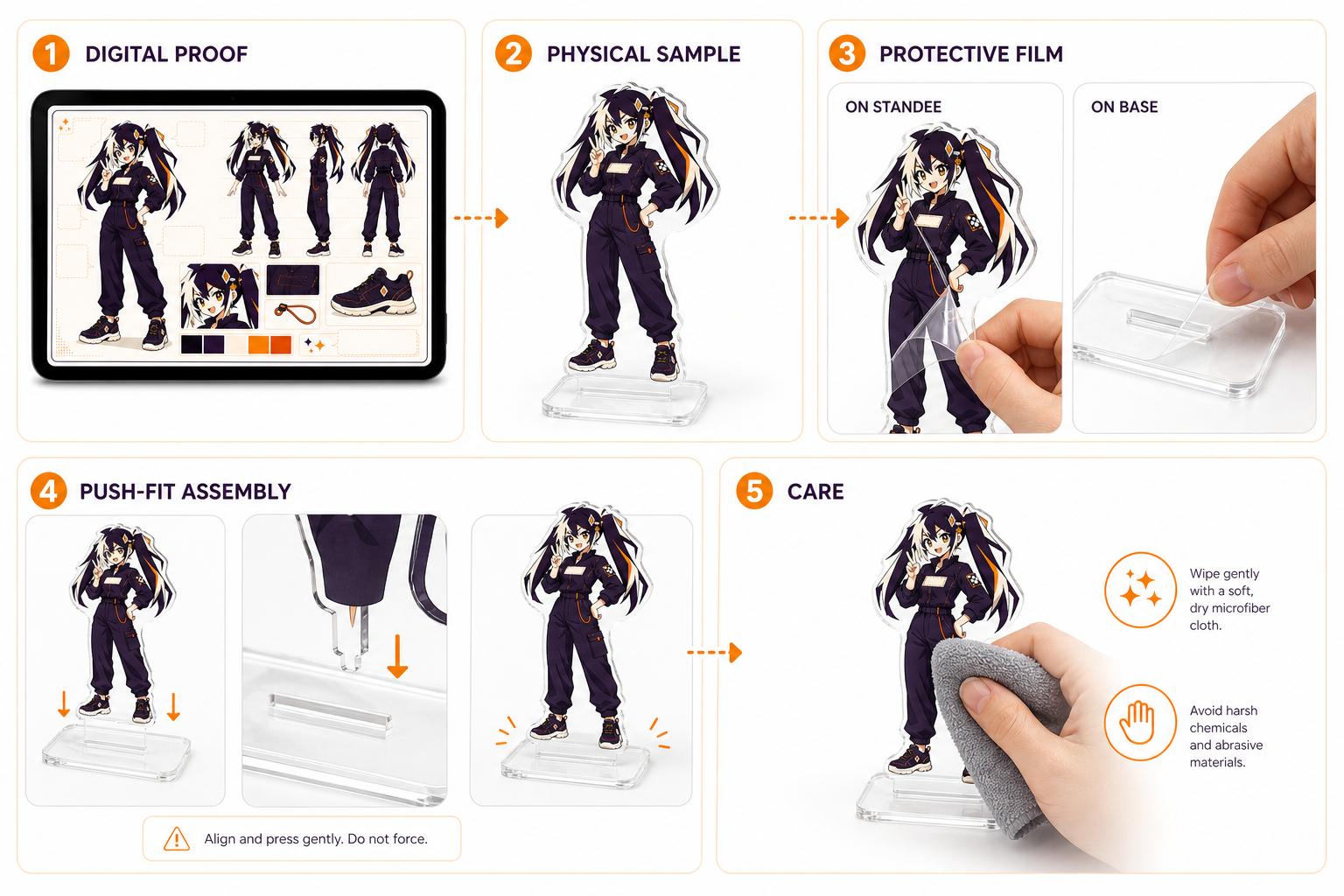
Order or approve samples for the products that carry the most visual or financial risk. Photograph the group together and check whether it reads as one collection at a glance.
Use the first launch to learn which character, pose, format and price point earns attention. Expand only after that evidence exists.
Define the question for a sample. You may need to judge small-feature readability, the relationship between artwork and finish, the physical assembly or the way the item is packed. Keep those questions specific enough to record an outcome. A sample is useful when it leads to an accepted decision or a named correction, not just another attractive photo.
For the audience test, record what people choose and what they ask. Interest in the character, interest in a particular product and willingness to buy at the displayed price are related but different signals. Note which products were actually available and how they were displayed. Expand the range based on the decision you can support, rather than treating a small test as proof of unlimited demand.
07
Protect the independence of the IP
Keep dated source files, contracts and permissions for every contributor. If a collection uses licensed characters, logos or other protected material, obtain the required permission before manufacturing or selling it.
Original-character positioning should not imitate another brand's trade dress or imply an affiliation that does not exist. For legal questions, use qualified counsel rather than relying on a production guide.
Keep the source of every asset traceable, including commissioned illustration, fonts, textures and other contributed elements. Save the relevant agreement or permission with the project and record the intended product and promotional uses that need review. This article does not decide whether a particular asset is legally usable; resolve unclear rights with the relevant rights holder or qualified adviser before committing the artwork to production.
Separate the approved production artwork from exploratory references. A mood board can explain a visual direction without becoming permission to reproduce another creator’s work. Make sure the files delivered for manufacturing are the intended final assets and that collaborators can identify their current versions. A clear handoff reduces both production confusion and uncertainty about what was authorized.
08
Give the first range a clear budget boundary
List the commitment for each proposed item using current quotations: artwork work still required, product quantities, any agreed samples, packing and delivery. Keep unknown costs visible until they are confirmed. Consider how much leftover stock you can store and offer later, especially for date-specific or event-specific packaging.
Compare the range as a whole. A lower unit price may still require more cash and leave more uncertain stock. Choose the product mix and test size that fit your actual limit, then ask the supplier to confirm the feasible production arrangement. This is a planning framework, not a forecast of profit or a recommendation for a particular investment.
09
Release a collection that can be reordered
Prepare a collection manifest linking each product to its design ID, export, dimensions, finish, quantities and packing. Keep the final proof and sample decisions beside that record. State the required arrival date and destination so the production discussion includes delivery as well as appearance.
After launch, retain the product-level result and the next decision: repeat unchanged, revise the artwork, test another format or retire the item. Keep the approved version separate from any experimental revision. The value of a focused first collection is that it leaves you with understandable evidence and a usable production record for the next one.
Keep a simple release image showing the exact products that belong to the first collection. Match it to the manifest and label any concept image that is not a confirmed product. This helps collaborators, photographers and the person preparing the table avoid presenting an unselected variant as available stock. Update that reference when a product is removed or revised, and keep the previous release separate for later comparison.
FAQ
Frequently asked questions
Do I need a large product range to launch an original character?
No fixed range size is required by this framework. Choose a manageable set with clear roles and enough distinction to learn from customer response. Each extra item brings artwork, production and inventory decisions.
Can I use the same illustration on every item?
Use the master illustration as a reference, but adapt it to each physical format. Check scale, cuts, attachment points, support and readability, and keep the product-specific exports separate.
Should I sample every possible product first?
Decide which uncertainty each sample would answer. Focus the review on the products and physical questions that affect the launch decision, then agree the sample arrangement for the actual order.
Does commissioning an illustration automatically cover every merchandise use?
Check the agreement and intended uses rather than assuming. Keep the relevant permissions with the artwork and resolve unclear terms before production. This guide does not interpret an individual contract.
When should I expand the collection?
Use the evidence from the first range: actual choices, repeated questions, availability and the reason for each proposed addition. Expand to answer a useful next question or meet demonstrated demand, not simply to increase the number of items.